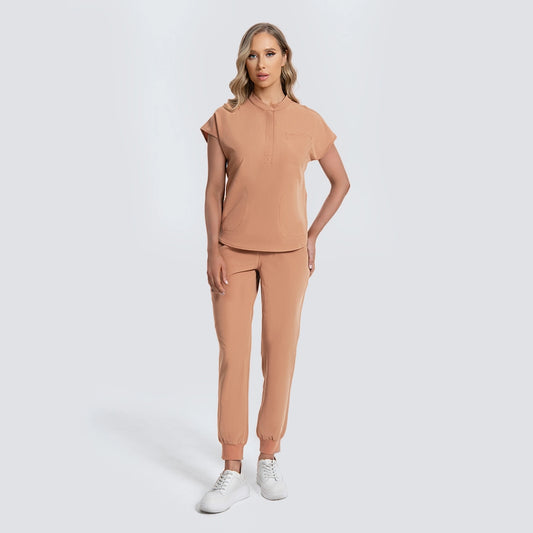
A cool start to your shift can quickly turn into a busy morning of walking, reaching, and bending. If your undershirt traps too much warmth or bunches beneath your scrub top, you may spend the day adjusting it. The right base layer should feel comfortable enough to leave alone.
So, what should you wear under scrubs? Start with a lightweight T-shirt or a close-fitting underscrub, then choose the sleeves, neckline, and fabric that suit your workplace and personal comfort. Here is how to build a combination that works.
Start With Your Workplace Dress Code
Before choosing a layer, check your employer’s uniform requirements. Some workplaces specify undershirt colors or limit visible sleeves. Requirements can also differ between departments and tasks, so a combination that works for one colleague may not suit your role.
Once you know what is permitted, consider why you want an extra layer. Is the room chilly? Would you prefer more coverage at the neckline? Do you want a softer feel against your skin? A clear purpose makes it easier to choose without adding unnecessary bulk.
Choose the Right Type of Undershirt
A Lightweight Short-Sleeve T-Shirt
A simple tee is a practical starting point if you want extra coverage without covering your forearms. Look for a smooth, lightweight style that sits comfortably beneath your scrub sleeves. Oversized tees can fold under the arms or gather around the waist.
Try it with your actual scrub top. A shirt that feels easy on its own may feel crowded once another garment sits over it.
A Long-Sleeve Underscrub
If your workplace allows long sleeves and you often feel cold, a thin long-sleeve underscrub is worth considering. Choose sleeves that stay in place without squeezing your arms, and cuffs that do not hang over your hands.
Close-fitting does not mean tight. You should be able to bend your elbows, reach forward, and lift your arms without the fabric pulling across your shoulders. Avoid choosing a smaller size simply to reduce bulk.
A Tank or Sleeveless Base Layer
A lightweight tank can add coverage beneath the body of your scrub top while leaving your arms uncovered. Check that the straps stay in place and that the neckline gives you the coverage you want when you bend. If you need arm warmth, this option will not provide it.

Pay Attention to Fabric and Feel
For layering, thickness matters as much as the fiber name. A heavy cotton tee and a thin cotton-blend undershirt can feel very different beneath the same scrubs. Feel the seams, check the fabric weight, and think about how much room your scrub top allows.
If you tend to get sweaty, look for a garment whose product description specifically identifies moisture-management or quick-drying features. Do not assume that every stretch shirt offers them. If softness is your priority, check whether the neckline, seams, or labels feel irritating during movement.
A little stretch can make reaching more comfortable, but the whole outfit needs room to move. Even a flexible base layer will feel restrictive beneath a scrub top that is too snug.
Get the Neckline, Length, and Color Right
A crew neck usually shows above a V-neck scrub top, creating a visible layer. A lower neckline can be more discreet. Neither is automatically better: choose the coverage and appearance you prefer within your dress code.
The hem should be long enough to stay comfortable when you reach, without leaving excess fabric gathered at your waistband. If you tuck it in, sit down and bend forward to check for pressure or bunching.
For color, start with approved shades. Navy under navy creates a coordinated look, while grey under a darker scrub top adds gentle contrast. With light-colored scrubs, check the full outfit in bright light; a contrasting base layer may be more visible than you expect.
Match Your Layers to Your Workday
For a consistently cool workspace, try one thin long-sleeve base layer before adding heavier clothing. For a warmer, more active day, a lightweight short-sleeve layer may feel more comfortable. If your scrub top already feels good on its own and extra coverage is unnecessary, you may not need an undershirt.
When temperatures vary, an approved removable outer layer can offer more flexibility than a thick shirt underneath. Choose around the conditions you actually experience indoors, rather than the outdoor forecast alone.
Do a Quick Movement Check
Before wearing a new combination for a full shift, take a minute to test it:
- Reach overhead: does the hem ride up?
- Stretch forward: do the shoulders or upper arms pull?
- Sit and bend: does fabric collect at the waist?
- Bend your elbows: do the sleeves bunch or restrict movement?
Adjust the cut or size if you keep noticing the same problem. A comfortable combination should let you move without repeatedly tugging at your clothes.
Build Your Everyday Layering Combination
Start with one base layer that fits your dress code and try it beneath your usual scrubs. Notice how it feels throughout the day before buying several of the same style.
Explore the Kungfu Scrubs UnderScrubs collection to compare layering options, and check each item’s sizing and care guidance before choosing. The best combination is one that gives you the coverage you want, fits smoothly, and stays comfortable as your day moves along.