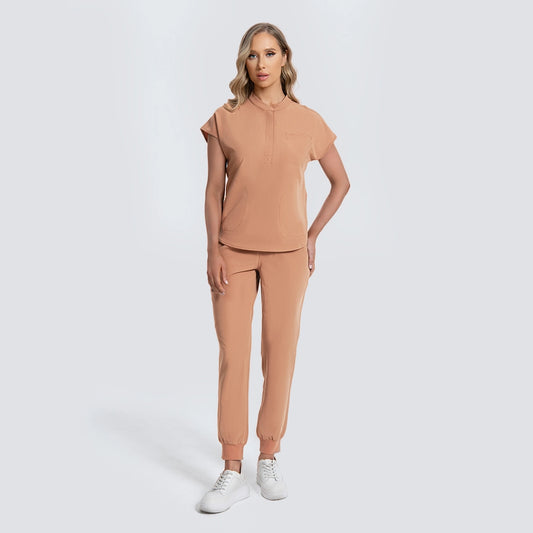
Scrubs are designed for demanding work, but practical clothing does not have to look basic. The difference between an ordinary scrub set and one that feels polished is rarely a large logo or an elaborate design. More often, it comes down to small, thoughtful details: the way the fabric falls, how the seams shape the body, where the pockets sit and how neatly everything is finished.
Premium-looking scrubs should still be comfortable, washable and easy to move in. The goal is not to turn a clinical uniform into formalwear. It is to create a professional appearance that feels intentional from the beginning of a shift to the end.
Here are five details that can instantly make scrubs look more refined.
1. Fabric With Structure and a Smooth Drape
Fabric is usually the first thing people notice, even if they cannot explain why. Lightweight material may feel comfortable, but if it is too thin, stiff or shiny, it can make an otherwise attractive scrub set look inexpensive.
Premium scrub fabric should strike a balance between softness and structure. It needs enough body to maintain a clean silhouette without restricting movement. When the wearer walks, bends or reaches, the fabric should move naturally and then recover rather than remaining stretched or wrinkled.

A smooth, matte surface often looks more sophisticated than a highly reflective finish. Dense, finely woven fabric can also help colors appear richer. Navy looks deeper, black looks cleaner and jewel tones such as wine, teal and forest green appear more saturated.
Stretch is important, but more stretch does not automatically mean better quality. A well-designed performance fabric should stretch where needed while returning to its original shape. If the knees, elbows or seat begin to sag during a shift, the entire outfit can look tired before the workday is over.
Breathability, moisture management and easy care still matter. The most premium fabric is not simply the one that looks good on a hanger—it is the one that keeps its appearance after movement, washing and repeated wear.
2. A Fit That Looks Tailored, Not Tight
Fit can transform even the simplest scrub design. Premium-looking scrubs follow the body without clinging to it. They provide definition through the shoulders, waist and hips while leaving enough room for comfortable movement.
On a scrub top, shoulder seams should sit close to the natural shoulder line. Excess fabric around the chest or underarms can make the garment appear oversized, while a top that pulls across the back may look too small. Subtle shaping through curved seams, darts or thoughtfully placed panels can create a cleaner silhouette without sacrificing mobility.
The length of the top matters too. A top that is too long may overwhelm a petite frame, while one that is too short can ride up when the wearer reaches or bends. Side vents and shaped hems help the garment move more naturally and prevent it from looking boxy.
Scrub pants should sit securely at the waist without bunching around the drawcord. The rise needs to work with the wearer’s proportions, and the pant length should complement the leg shape. Straight-leg styles look best when the hem falls neatly over the shoe, while joggers should finish cleanly at or slightly above the ankle.
Petite, regular and tall options are not just about comfort. The correct length creates better proportions and makes the complete uniform look more intentional.

3. Precise Seams and Consistent Stitching
Stitching may be a small detail, but it is one of the clearest signs of garment quality. Straight, evenly spaced stitches create a cleaner finish and help the garment maintain its shape.
Look closely at areas that receive the most stress, including pocket corners, side seams, armholes and the crotch seam. Reinforced stitching or bar tacks in these locations can improve durability while giving the garment a more considered appearance.
The direction of the seams also matters. Well-positioned seams can visually lengthen the body, define the waist or create a streamlined shape. Curved side panels, angled shoulder seams and clean back yokes can add subtle structure without making the scrub design feel overly fashionable.
Tonal stitching—the use of thread that closely matches the fabric—usually creates a quiet, polished look. Contrast stitching can work well when it is deliberate, but inconsistent or overly bright thread may distract from the overall design.
The inside of the garment also deserves attention. Neatly finished internal seams reduce irritation and help prevent fraying. Even though these details may not be visible while the scrubs are being worn, they contribute to how the garment feels, washes and lasts.
4. Pockets That Are Integrated Into the Design
Healthcare professionals need functional storage, but adding more pockets does not always improve a scrub set. Too many oversized or poorly positioned pockets can make the garment look bulky, especially when they are filled.
Premium-looking scrubs treat pockets as part of the overall design. Pocket openings should lie flat, seams should remain smooth and the shape should complement the garment rather than appearing added as an afterthought.
Angled pockets can be easier to access and create a streamlined appearance. Hidden compartments can separate a phone, pen or small personal item without adding another visible pocket to the outside. Zippered pockets offer extra security, but the zipper should be lightweight and positioned so that it does not interfere with movement.
Pocket placement is just as important as pocket count. A thigh pocket that sits too low may swing while walking, while a chest pocket that is too large can pull the scrub top out of shape. Well-positioned pockets distribute weight more effectively and help the garment maintain its silhouette.
Reinforced corners and strong pocket bags are also signs of better construction. A beautiful pocket is only useful if it can withstand the demands of a real shift.

5. Refined Necklines, Drawcords and Hardware
Finishing details are often what separate a basic scrub set from one that feels complete.
A well-constructed neckline should lie flat against the body without curling, stretching or gaping. V-necks can look crisp and classic, while mock-neck, zip-neck and collared styles create a more modern appearance. Regardless of the shape, the edge should feel stable and maintain its structure after washing.
Drawcords also affect the overall look. Wide cords, frayed ends or excessive length can make scrub pants appear less polished. Tonal drawcords with neat knots or understated metal tips create a cleaner finish. A supportive waistband that combines elastic with an adjustable drawcord can provide security without excessive gathering.
Hardware should be subtle and practical. Matte zipper pulls, low-profile snaps and coordinated metal details generally look more sophisticated than oversized, highly reflective components. They should also feel smooth and durable, with no sharp edges that could catch on equipment or furniture.
Even labels and logo placement influence the appearance of scrubs. Small, discreet branding allows the fabric, fit and construction to remain the focus. When every component shares the same visual language, the entire uniform feels more cohesive.

Premium Is About Restraint
Premium scrubs do not need complicated decoration. In fact, the most refined designs are often the simplest. Their quality is communicated through balanced proportions, durable fabric, thoughtful construction and details that serve a clear purpose.
When choosing a new scrub set, look beyond the color and basic silhouette. Examine the fabric in motion, check the stitching around high-stress areas, test the pockets and notice how the neckline and waistband sit on the body. Consider how the garment will look after several hours of wear—not only when it is freshly pressed.
The best scrubs support the wearer without demanding attention. They feel comfortable, perform reliably and maintain a professional appearance throughout the shift. That quiet combination of function and refinement is what truly makes scrubs look premium.