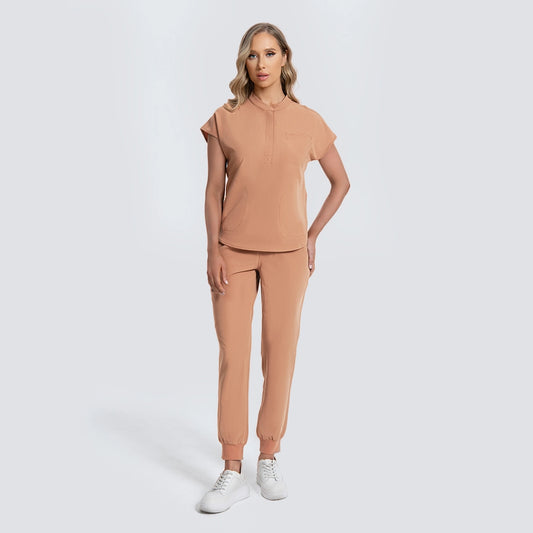
A great pair of men’s scrub pants should do more than match a scrub top. It should support long hours of walking, bending, lifting and standing while keeping the wearer comfortable and professional. The best pants often feel almost unnoticeable during a shift: the waistband stays in place, the fabric moves naturally, the pockets hold what is needed and the legs never feel restrictive.
However, comfort alone is not enough. Scrub pants that are excessively loose may look untidy, while pants that are too slim can limit movement and place stress on the seams. The right pair brings together fit, fabric, storage and durability in a way that suits both the job and the wearer.
Here are the most important features to consider when choosing men’s scrub pants.
A Fit That Allows Movement Without Looking Baggy
Traditional scrub pants were often designed with a wide, unstructured shape. Although that provided room to move, it could also create excess fabric around the seat, thighs and ankles. Modern men’s scrub pants offer a more considered fit.
A good fit should follow the body without clinging to it. There should be enough room through the hips and thighs to squat, climb stairs or kneel without pulling across the seat. At the same time, the legs should have a clean shape that does not overwhelm the wearer’s frame.
The rise is especially important. A rise that is too low may slide down when bending, while one that is too high can bunch under the scrub top. A well-proportioned mid-rise usually provides reliable coverage and sits naturally at the waist.
Fit should always be evaluated in motion. Before deciding on a pair, sit down, raise one knee, bend forward and take several long steps. If the waistband rolls, the fabric pulls at the thighs or the pants need constant adjustment, the fit is probably not right.
Performance Fabric That Can Handle a Full Shift
Men’s scrub pants are exposed to friction, repeated washing and constant movement. Their fabric needs to be comfortable enough for a long shift but strong enough to maintain its shape.
A blend with four-way stretch is particularly useful because it moves both horizontally and vertically. This makes it easier to crouch, reach and change direction without feeling restricted. The fabric should also recover after stretching. If the knees or seat remain baggy after several hours, the pants may begin to look worn even when they are relatively new.
Breathability is another priority, especially in warm hospitals or fast-paced departments. Lightweight fabric can help release heat, but it should not be so thin that it becomes transparent or loses structure. A smooth, matte fabric with moderate density often creates the best balance between comfort and a polished appearance.
Moisture-wicking and quick-drying properties can make demanding shifts more comfortable. Easy-care fabric that resists excessive wrinkling is also helpful for healthcare professionals who need their uniforms to look presentable without complicated maintenance.
A Waistband That Stays Secure and Comfortable
The waistband is one of the most important parts of scrub pants because it affects comfort every minute they are worn.
A fully elastic waistband is easy to pull on, but weak elastic may stretch out or roll over time. A drawstring-only waist can be adjusted precisely, although a narrow cord may dig into the body when tied tightly.

Many well-designed men’s scrub pants combine a wide elastic waistband with an adjustable drawcord. The elastic distributes pressure evenly, while the drawcord allows the wearer to fine-tune the fit. This combination helps the pants stay secure even when the pockets are carrying a phone or other items.
Look for a waistband that lies relatively flat instead of creating a large amount of gathered fabric. The drawcord should be long enough to tie easily but not so long that it hangs below the scrub top. A soft interior finish also helps reduce rubbing during extended wear.
The waistband should remain in place when sitting, bending and walking quickly. If it slides downward when the pockets are loaded, the problem may become frustrating during a busy shift.
Enough Stretch in the Right Places
Stretch fabric is useful, but fabric alone does not determine mobility. The way the pants are cut also affects how freely the wearer can move.

A gusseted crotch can create additional room between the legs and reduce tension on the central seams. Articulated knees or carefully shaped leg panels may make kneeling and climbing stairs easier. These features can be especially valuable for nurses, veterinary professionals, emergency department staff and anyone who regularly moves between standing and floor-level tasks.
The pants should provide space through the seat and upper thigh without adding unnecessary width throughout the entire leg. Strategic room where movement happens produces a better result than simply making the whole garment oversized.
After stretching or crouching, the pants should return to a clean shape. Material that remains pulled or wrinkled around the knees can affect both comfort and appearance.
Practical Pockets Without Unnecessary Bulk
The ideal pocket layout depends on the wearer’s role. A nurse may need space for a phone, pens, scissors and a small notebook, while a physician working in a clinic may prefer fewer, slimmer pockets. More pockets are not automatically better.
Front hand pockets should be deep enough to prevent small items from falling out when sitting. A back pocket can hold a wallet or folded notes, but it should lie flat when empty. Cargo pockets provide additional capacity, although their position matters. A pocket placed too low on the leg may swing while walking, while one placed too far toward the front can feel uncomfortable when bending.

Internal compartments can improve organization without making the outside of the pants look overly complicated. A dedicated phone sleeve, pen slot or hidden zip pocket keeps essential items separate and easier to find.
Pocket construction should also be strong. Reinforced corners, secure stitching and durable pocket bags help prevent tearing. Before choosing scrub pants, consider not only how many pockets they have but also whether those pockets remain comfortable when filled.
The Right Leg Shape for the Job
Men’s scrub pants are generally available in straight-leg, tapered and jogger styles. Each creates a different appearance and wearing experience.
Straight-leg pants offer a classic, relaxed silhouette. They provide consistent room from the thigh to the hem and work well for professionals who prefer a traditional uniform. The hem should fall neatly over the shoe without dragging on the floor.
Tapered scrub pants become narrower toward the ankle while remaining open at the bottom. They look more streamlined than a traditional straight leg but can still accommodate many types of work footwear. For many wearers, this style offers a useful balance between modern and professional.
Jogger scrub pants have an elastic or ribbed cuff at the ankle. The cuff prevents the hem from touching the floor and makes the pants convenient for active roles. However, the cuff should sit comfortably without squeezing, riding up or creating excessive fabric above the ankle.
The best leg shape depends on workplace requirements, body proportions and personal preference. No single style works for every professional.

Correct Inseam and Proportions
Even well-designed scrub pants can look and feel wrong if the length is unsuitable. Pants that are too long may drag on the floor, collect dirt and create a tripping risk. Pants that are too short may pull upward while sitting and expose more ankle than intended.
Straight-leg and tapered pants should generally reach the top of the shoe with little or no bunching. Jogger cuffs should sit around the ankle and remain in place while walking. Petite, regular and tall lengths can help different wearers achieve the intended fit without needing alterations.
The inseam should be considered together with the rise and leg shape. Two pants with the same listed inseam may fit differently if one sits higher at the waist or has a lower crotch.
Checking the manufacturer’s size chart is more reliable than automatically selecting the same size worn in another brand. Measure the natural waist, fullest part of the hips and inside leg, then compare those measurements with the chart.
Construction That Survives Repeated Wear
Healthcare uniforms are washed more frequently than most everyday clothing, so durability is essential. High-stress areas such as the crotch seam, pocket corners, waistband and inner thighs should have secure, consistent stitching.
Bar tacks or reinforced stitches around pocket openings help prevent tearing when items are removed repeatedly. Strong interior seams reduce fraying, while quality elastic helps the waistband retain its shape.
Durability also depends on how the pants respond to laundering. A good pair should resist excessive shrinking, fading and pilling when cared for according to its instructions. Dark colors should remain rich, and the legs should not twist after washing.
It can be useful to purchase one pair first and wear it through several shifts and laundry cycles before buying additional colors. This provides a more realistic picture of its long-term comfort and performance.
Comfort Should Last Beyond the First Hour
Scrub pants can feel comfortable in a fitting room but behave differently during a demanding shift. Small issues become more noticeable after hours of movement.
A seam that rubs against the inner thigh, a waistband that rolls when sitting or a cargo pocket that repeatedly hits the knee can quickly become distracting. Comfortable pants should work well in different positions and remain balanced even when the pockets are loaded.
Pay attention to temperature as well. Heavy fabric may feel comfortable in an air-conditioned store but become too warm in a busy hospital. Extremely lightweight fabric may feel cool but lack the coverage or durability required for daily work.
The goal is not simply softness. Long-lasting comfort comes from a combination of breathable fabric, a stable waistband, well-positioned seams and a fit that supports natural movement.
How to Choose the Best Men’s Scrub Pants
Before selecting a pair, consider the realities of the job. How much time is spent walking or standing? Is kneeling common? Which tools or personal items must be carried? What footwear is normally worn?
Professionals in highly active roles may benefit from four-way stretch, a secure waistband and a tapered or jogger leg. Those working in offices, clinics or administrative settings may prefer a cleaner straight-leg design with fewer visible cargo pockets.
Try the pants with the type of scrub top and shoes normally worn at work. Load the pockets with everyday items and move through several common positions. This is a much more useful test than judging the pants only by how they look while standing still.
The Best Pair Balances Every Detail
Great men’s scrub pants do not depend on one impressive feature. Their quality comes from the way multiple details work together: a secure waistband, breathable stretch fabric, useful pockets, accurate proportions and durable construction.
The right pair should move easily, hold essential items and maintain a professional shape throughout the shift. When scrub pants fit properly and perform reliably, the wearer can focus less on adjusting a uniform and more on the work that matters.