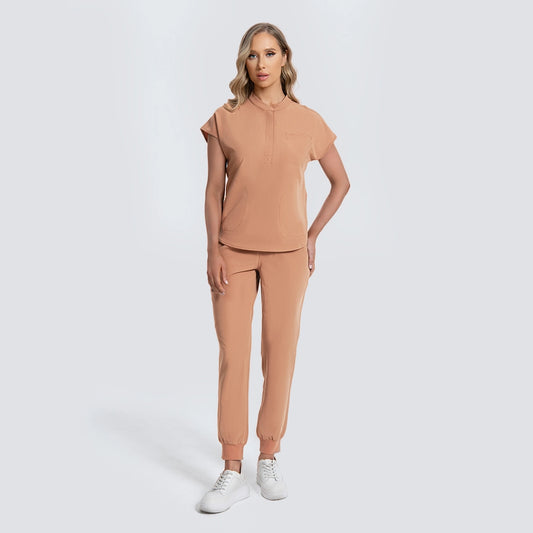
Hospitals can feel warm for many reasons. Some departments run hotter than others, older buildings may have uneven ventilation, and personal protective equipment can trap additional heat. Add constant walking, lifting, bending and long hours under bright lights, and an ordinary shift can quickly become uncomfortable.
You may not be able to control the temperature of your workplace, but the right scrubs can make working in a hot hospital more manageable. Breathable fabric, a comfortable fit and lightweight construction can help you move more freely and feel less weighed down throughout the day.
Here is what to look for when choosing scrubs for warm clinical environments.
Why Do Some Hospital Departments Feel So Hot?
The temperature inside a hospital is not always consistent. One hallway may feel comfortable while another treatment area feels noticeably warmer.
Healthcare professionals may feel especially hot when they work in:
-
Busy emergency departments
-
Crowded patient rooms
-
Older hospital buildings
-
Areas with limited airflow
-
Imaging or procedure rooms
-
Kitchens and food-service areas
-
Sterile environments requiring additional layers
-
Departments where staff move constantly
-
Facilities located in hot or humid climates
Protective gowns, masks, gloves and other required equipment can also reduce airflow around the body. Scrubs cannot replace workplace cooling measures, and they should never interfere with required protective equipment, but choosing a more suitable uniform can improve everyday comfort.
Start With Lightweight Fabric
Fabric weight is one of the first things to consider when shopping for hot-weather scrubs.
Heavy material may feel durable, but it can also trap heat and become uncomfortable during a physically active shift. Lightweight fabric usually allows easier movement and feels less bulky underneath protective clothing.
However, lightweight should not mean thin or transparent. Scrubs still need to provide appropriate coverage, maintain their shape and withstand frequent washing.
Before buying, hold the fabric up to a bright light and check its opacity. You can also stretch it gently to see whether it becomes overly sheer. If possible, try the scrubs while bending, sitting and reaching to make sure they provide reliable coverage from every angle.
Choose Breathable Scrubs
Breathability describes how easily air can move through a material. In warm environments, breathable scrubs may help heat escape instead of remaining trapped close to the skin.
Natural fibers such as cotton are often associated with breathability and softness. However, cotton can absorb moisture and may take longer to dry once it becomes damp.
Synthetic fibers such as polyester generally dry more quickly and resist wrinkles, but their comfort depends on the weave, weight and overall fabric construction. A lightweight polyester blend can feel cooler than a heavy cotton fabric, so the fiber label alone does not tell the whole story.
Instead of choosing scrubs based only on one material, consider how the complete fabric feels and performs.

Look for Moisture-Management Features
During a busy shift, perspiration is almost unavoidable. Moisture-management fabric is designed to move moisture away from the skin and spread it across the material, where it can dry more efficiently.
This may help the uniform feel less damp during periods of intense activity.
Quick-drying fabric can be particularly helpful for employees who:
-
Walk long distances between departments
-
Frequently lift or reposition patients
-
Wear protective layers for extended periods
-
Work in humid climates
-
Experience heavy perspiration
-
Commute in warm weather
Moisture-management features do not stop sweating, but they may improve comfort by helping the fabric dry faster.
Do Not Choose Scrubs That Are Too Tight
Tight scrubs may restrict movement and hold fabric directly against the skin. They can also become uncomfortable when the wearer begins to perspire.
A slightly relaxed fit allows more room for airflow and easier movement through the shoulders, waist, hips and knees. However, scrubs should not be so oversized that excess material catches on equipment or interferes with clinical tasks.
Look for a balanced fit:
-
Enough room across the shoulders
-
Space to reach without pulling across the back
-
A waistband that stays secure without feeling restrictive
-
Comfortable room through the hips and thighs
-
Pants that allow squatting and kneeling
-
A top that provides coverage without excessive bulk
The best fit should feel comfortable while you are moving, not only while standing still.
Stretch Can Improve Warm-Weather Comfort
Stretch does not directly make fabric cooler, but it can make lightweight scrubs easier to move in.
Without stretch, a loose uniform may be required to provide enough mobility. A small amount of elastane or spandex can allow a more streamlined scrub set to bend and recover without feeling restrictive.
Four-way stretch is particularly useful for healthcare professionals who reach, lift, crouch and change direction throughout the day.
When trying on stretch scrubs, check whether the fabric returns to its original shape. Material that stays stretched at the knees, elbows or seat may look untidy and become less comfortable over time.

Pay Attention to the Scrub Top
A scrub top can trap heat around the chest, shoulders and back, especially when it is layered over an undershirt.
For warm hospitals, consider tops with:
-
Lightweight fabric
-
Short, unrestricted sleeves
-
Side vents
-
A comfortable neckline
-
Enough room through the upper back
-
Minimal unnecessary layers
-
Pockets that do not create excessive bulk
Side vents can make it easier to bend and may allow the hem to move more naturally. A simple V-neck or open neckline can also feel less restrictive, provided it meets workplace coverage requirements.
Large layered pockets may be practical, but they add fabric to the front of the garment. Choose the storage you actually need instead of selecting the maximum possible number of pockets.
Choose the Right Scrub Pants
The best pants for a hot hospital provide room to move without using more fabric than necessary.
Jogger scrub pants keep the hems controlled and may feel less bulky around the ankles. Straight-leg pants offer a classic fit and can provide more airflow around the lower legs. Both styles can work well when made from lightweight, breathable material.
A comfortable waistband is equally important. Wide elastic waistbands can distribute pressure more evenly, while an adjustable drawstring helps maintain a secure fit.
Avoid pants with an overly tight waist or heavy stacks of cargo pockets. Carrying too many items adds weight and can pull the fabric against the body.
Should You Wear an Undershirt?
An undershirt can provide extra coverage and help absorb moisture, but it also creates another layer.
If your workplace requires or you prefer an undershirt, choose a lightweight, close-fitting option designed to dry quickly. Avoid thick cotton shirts that may become saturated and remain damp during a long shift.
The sleeves and neckline should stay hidden beneath the scrub top unless your facility permits visible layering.
In very warm environments, a well-fitting opaque scrub top may be more comfortable without an undershirt. Personal comfort, workplace dress requirements and clinical coverage needs should guide the decision.
What Are the Best Scrub Colors for Hot Hospitals?
Light colors absorb less heat from direct sunlight, but most hospital employees work indoors, where fabric weight and breathability usually matter more than color.
Color can still influence comfort in other ways. Very pale shades may reveal perspiration or become slightly transparent when damp. Dark colors provide dependable coverage but may make salt marks or lint more visible.
Practical choices include:
-
Medium blue
-
Teal
-
Pewter
-
Olive
-
Navy
-
Wine
-
Muted green
If your employer assigns uniform colors by department, focus on finding the lightest and most breathable approved fabric within that color requirement.
Keep an Extra Scrub Top Available
On particularly hot or demanding days, changing into a clean, dry scrub top during a break can make the second half of a shift more comfortable.
A small backup kit might include:
-
One clean scrub top
-
A lightweight undershirt
-
Fresh socks
-
Deodorant
-
A small towel
-
A sealable bag for worn clothing
Store backup garments in a clean, dry location and keep worn items separate. Follow workplace procedures whenever clothing has been exposed to contaminants.
Wash Hot-Weather Scrubs Correctly
Breathable and moisture-management fabrics need proper care to continue performing well.
Always check the garment label before washing. Using too much detergent may leave residue in the fibers, while fabric softener can affect the performance of some moisture-management materials.
Lower drying temperatures may help preserve stretch fibers and reduce shrinkage. Removing scrubs promptly from the dryer can also limit wrinkles.
If a uniform retains odors after washing, check whether the machine is overloaded or whether too much detergent is being used. Scrubs need enough space and water movement to rinse thoroughly.
Features to Look for in Scrubs for Hot Hospitals
When comparing warm-weather scrubs, prioritize:
-
Lightweight but opaque fabric
-
Breathable construction
-
Quick-drying or moisture-management performance
-
Comfortable stretch
-
A relaxed but professional fit
-
Short, unrestricted sleeves
-
Side vents
-
A secure, nonrestrictive waistband
-
Essential pockets without excessive bulk
-
Easy-care fabric that tolerates frequent washing
No single feature determines whether a scrub set will feel cool. Fabric weight, fit, weave and construction all work together.

Frequently Asked Questions
Are Cotton Scrubs Best for Hot Hospitals?
Cotton can feel soft and breathable, but it absorbs moisture and may dry slowly. Cotton blends may offer a better balance of softness, durability and drying speed.
Is Polyester Too Hot for Scrubs?
Not necessarily. Lightweight, breathable polyester blends can be comfortable in warm environments and often dry faster than cotton. Fabric construction matters more than the fiber name alone.
Are Jogger Scrubs Cooler Than Straight-Leg Scrubs?
Neither style is automatically cooler. Joggers reduce loose fabric around the ankles, while straight-leg pants may provide more lower-leg airflow. Choose the lighter, better-fitting option.
Should Scrubs Be Loose in Hot Weather?
Scrubs should have enough room for airflow and movement without becoming excessively baggy. Very tight uniforms may feel hotter, while overly loose garments can interfere with work.
How Many Scrub Sets Are Needed in Hot Weather?
Ideally, have one clean set for every scheduled shift plus at least one backup set. Employees who perspire heavily may benefit from keeping an additional top at work.
Stay Cool Without Compromising Professional Performance
Working in a hot hospital can be exhausting, especially during long shifts filled with constant movement and protective layers.
The right scrubs will not change the room temperature, but they can reduce unnecessary weight, improve mobility and help moisture dry more efficiently. Focus on lightweight, breathable fabric, a comfortable fit and only the pockets and layers you genuinely need.
When your workwear supports airflow and movement, you can spend less time thinking about the heat—and more time focusing on the people who depend on your care.